


Study Chairman: B Cortese, MD
PI: Rima Chaddad, MD
Steering committee: Beatrice Barbano, Mt, Marco Frazzetto, MD, Sara Malakouti, MD, Cataldo Strangi, Eng.
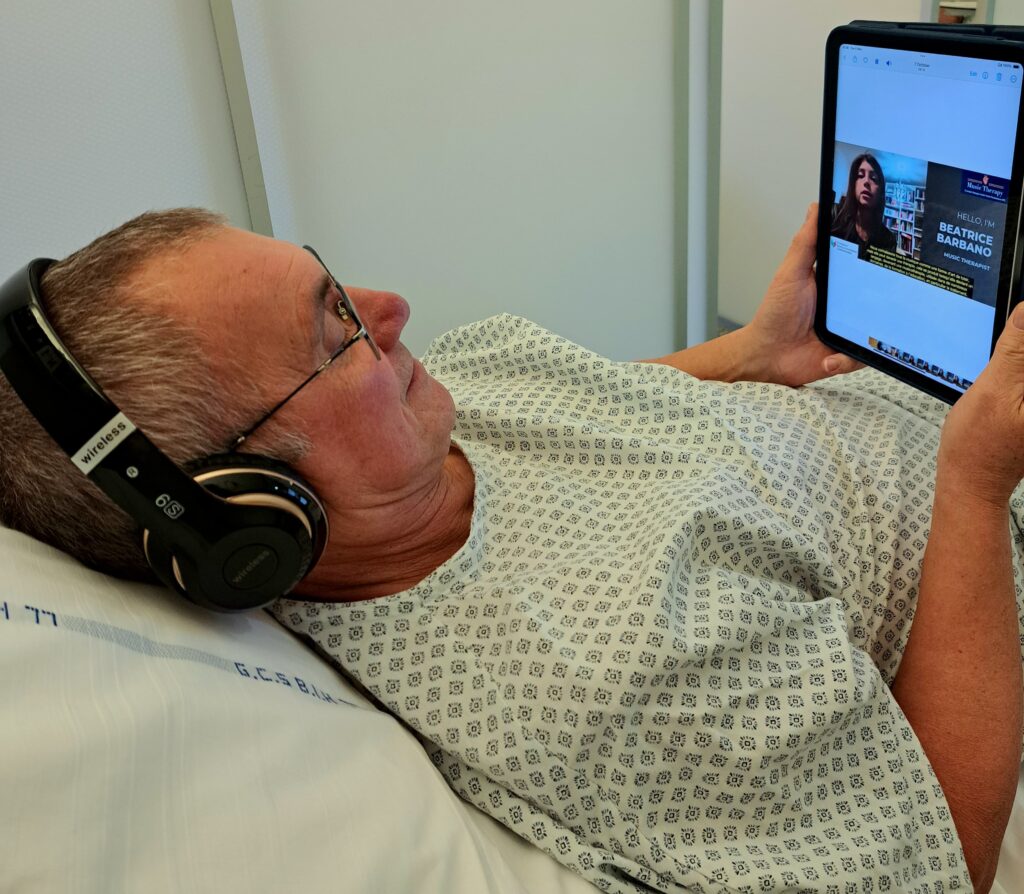
The MUS.E I RCT study was created to investigate the use of music therapy in a little-explored and challenging setting: the operating room during angioplasty and stent procedures. The aim of the project was to study the effects of listening to personalized music, created specifically for each patient by a music therapist, administered before and during the procedure.
Research Rationale
“The cath lab is a stressful environment for patients, and that can provoke physiological responses such as an increase in sympathetic tone and elevated cortisol levels, blood pressure, and heart rate,” said Prof. Cortese. “There are also studies linking high levels of anxiety to poorer patient outcomes.”
The rationale behind the MUS.E I study was to explore whether personalized music therapy could counteract these stress-induced physiological changes by reducing sympathetic activation and improving hemodynamic stability during percutaneous coronary interventions (PCI).
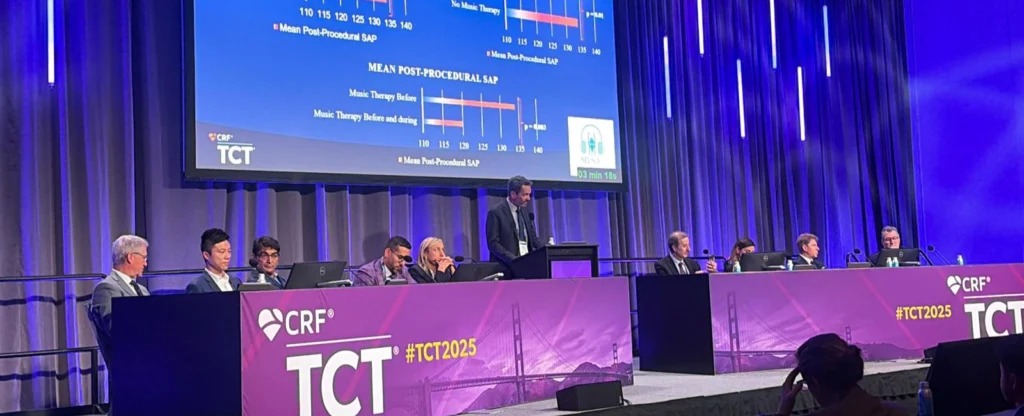
In the trial, mean postprocedural systolic blood pressure was significantly lower in patients exposed to music therapy before and during PCI compared with those receiving no music and those receiving music therapy before PCI alone (mean 120 mm Hg vs 134 mm Hg and 134 mm Hg, respectively; P =0.02). Pain levels, heart rate, and troponin levels were also lower in patients randomized to music—both before and during PCI and before PCI alone—compared with standard therapy.
Prof. Cortese cautioned against overinterpreting these results, emphasizing that the study’s small sample size warrants further investigation, though the findings suggest a promising physiological benefit associated with personalized music exposure in the cath lab.
Study Overview and Results
The primary objective of the study was to verify whether listening to personalized music could reduce stress and influence heart rate and blood pressure, through continuous monitoring of physiological parameters during the operation. Indeed, better control of stress factors and cardiovascular parameters could help reduce cardiovascular risk. The innovation of the study goes beyond its field of application: the scientific approach adopted and the originality of the music therapy test administered to patients make it possible to determine which kind of music is most suitable for each individual.
The use of personalized music during procedures influences heart rate and blood pressure, helping to reduce the incidence of arrhythmias during interventions and significantly lowering troponin release (associated with so-called periprocedural myocardial infarction). MUS.E I was accepted as the first study of its kind at the world’s most important interventional cardiology congress, TCT, recently held in San Francisco, where it was presented as Late Breaking Clinical Science in a packed room of interventional cardiologists from all over the world.
Following the presentation of our positive data confirming the benefits of music therapy, TCTMD
published an article and provided visibility on its social channels, generating significant scientific resonance. (https://www.tctmd.com/news/concerto-cath-lab-music-benefits-heart-health-after-pci)
Future Directions
These results represent a solid starting point for Fondazione RIC: the MUS.E II project is already in development, along with the creation of an App for monitoring physiological parameters in the cardiac catheterization laboratory. The next ambitious goal is to isolate the fragments of the musical pieces involved in the variation of clinical parameters, to understand which specific musical elements can influence our physiological reactions.
The use of music therapy as a complementary treatment in the cardiovascular field is a valuable resource: reducing the need for pharmacological therapies through better stress management and decreasing the occurrence of arrhythmias could open new perspectives for improving patient treatment and compliance
Publications
The manuscript titled “Effect of Tailored Music Therapy on Post-Procedural Systolic Blood Pressure During Invasive Coronary Angiography: The MUS.E I Randomized Clinical Trial” has been accepted for publication in Heart (BMJ) journal