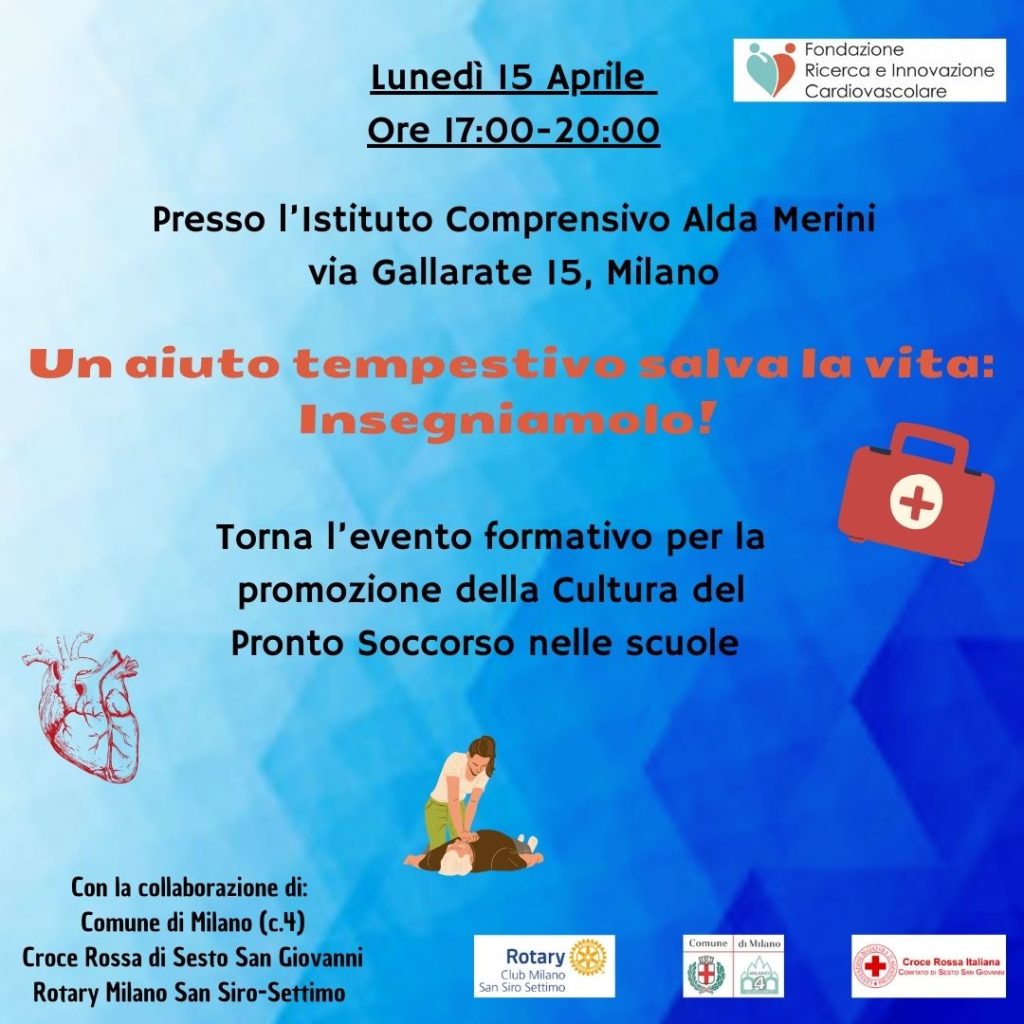
On April 15, the project “A Timely Help Saves Lives: Let’s Teach It!” was relaunched at the Istituto Comprensivo Statale Alda Merini, located at Via Gallarate 15 in Milan, following requests from several teachers of the school. The initiative was carried out in collaboration with Rotary Milano San Siro–Settimo, the Municipality of Milan (District 4), and the Italian Red Cross of Sesto San Giovanni.
During the event, participants had the opportunity to deepen their knowledge of first aid through a dedicated lecture, hands-on demonstrations, and practical training sessions focused on cardiopulmonary resuscitation (CPR) and the use of a semi-automatic external defibrillator (AED), supported by professional manikins and specialized equipment.
At present, and behind European guidelines, basic first aid courses are not included in the Italian school curriculum. Over the years, several initiatives have emerged to address this gap, culminating recently in the submission of a bill to the Chamber of Deputies by the Forza Italia party. The proposal aims to make first aid training mandatory in lower and upper secondary schools.
The objective of such courses would be to train students to respond effectively in emergency situations, with a focus on life-saving procedures, airway obstruction management, and basic interventions in cases of sudden illness or accidents.
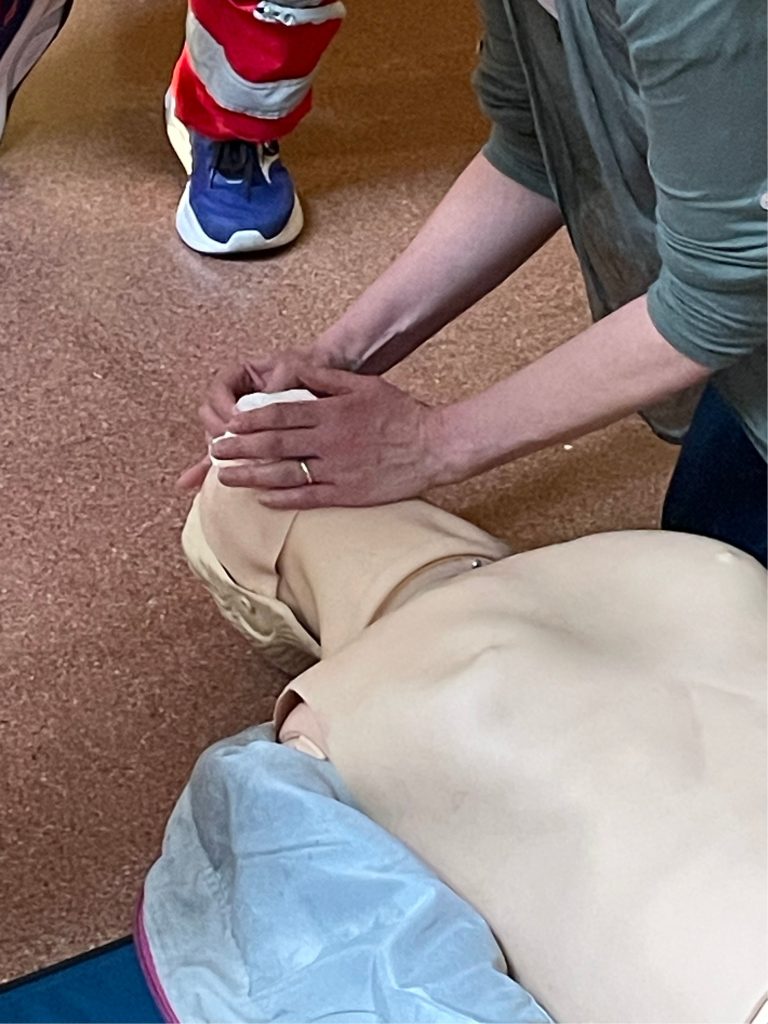
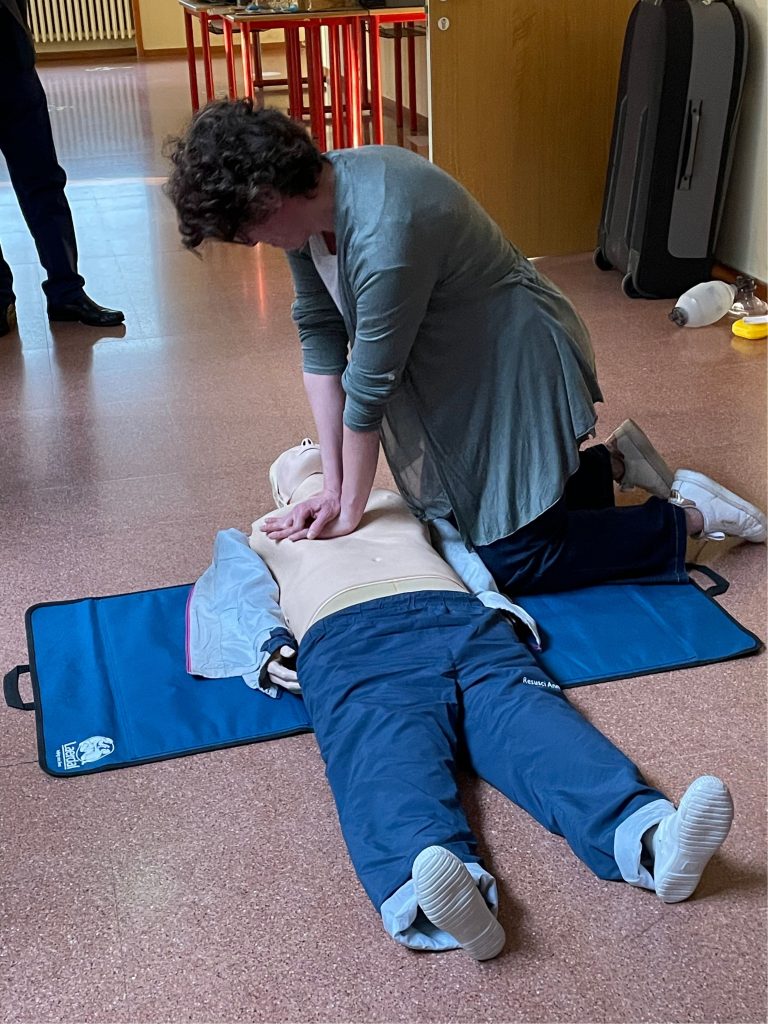
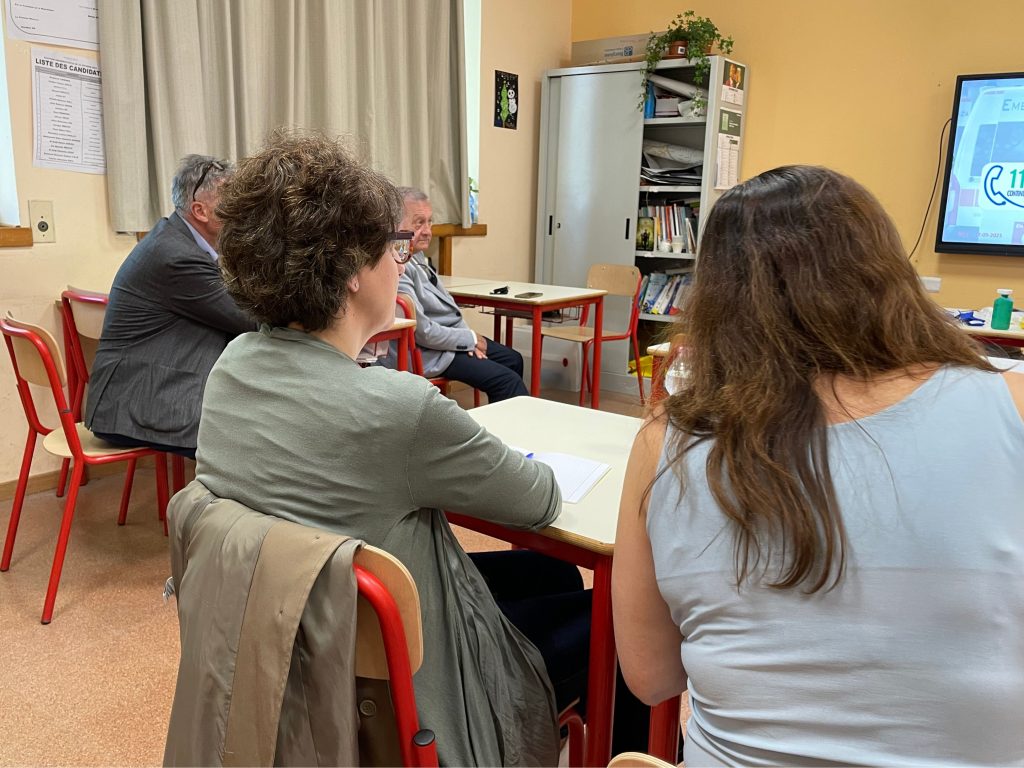
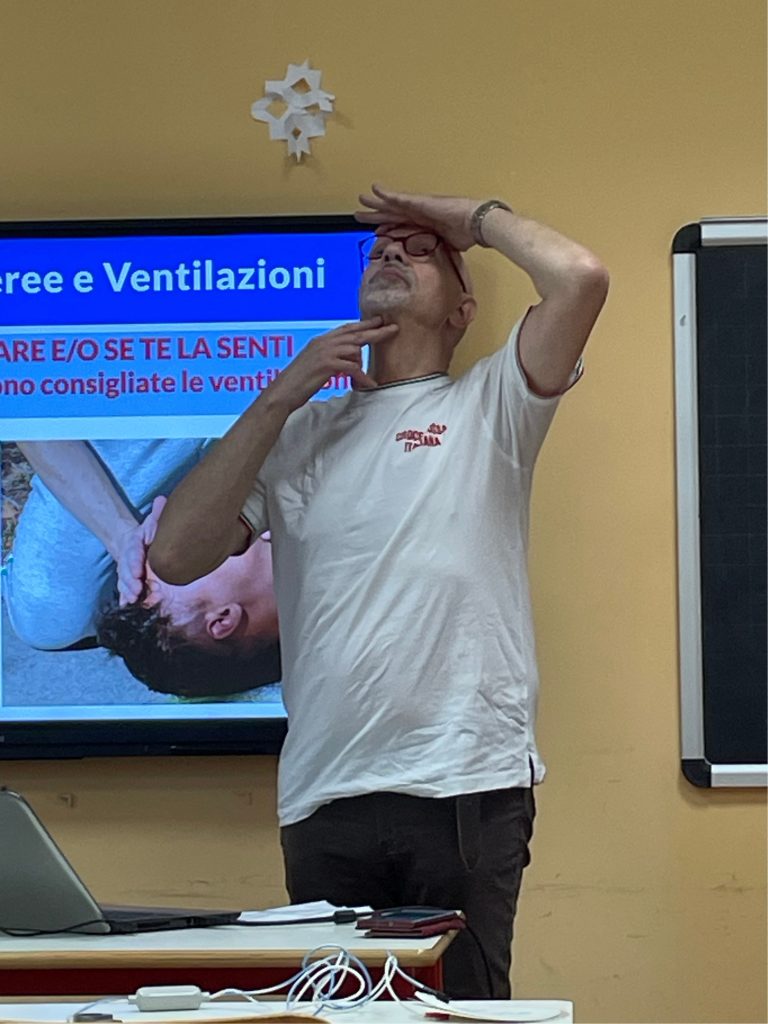
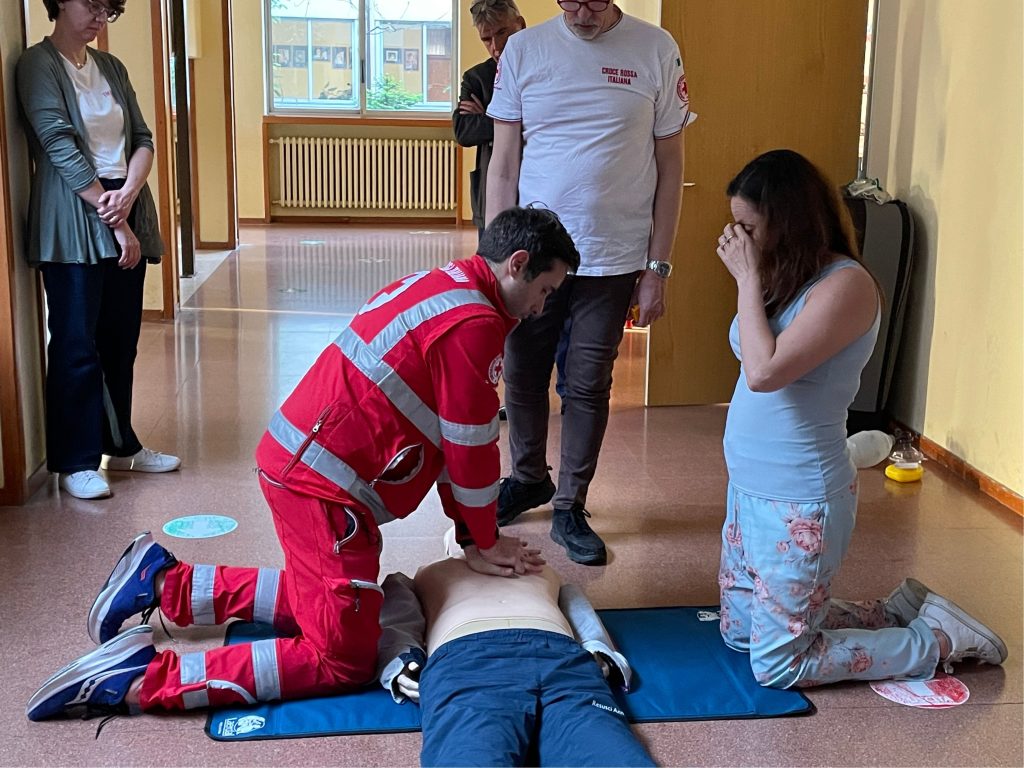
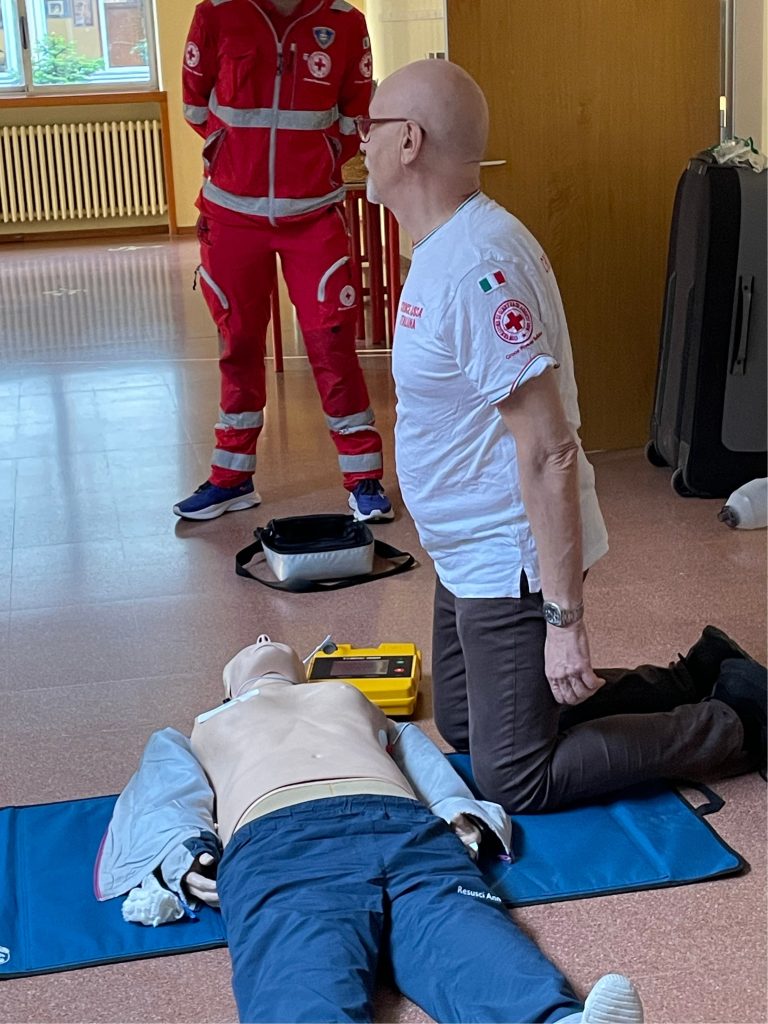
The strong interest shown by teaching staff in receiving first aid training—often outside their regular working hours—highlights their commitment to protecting their students and, more broadly, the community. The next step of the initiative will involve a handover phase, during which teachers themselves will pass on these skills to students, with continued support from professional instructors.
These developments underscore the importance of the cause long championed by the RIC Foundation and its partners, who continue to stress that timely assistance can save lives.
“A Timely Help Saves Lives: Let’s Teach It!” is an initiative driven by a diverse group of professionals, led by Bernardo Cortese, interventional cardiologist, and Roberto Galvagno, attorney and project coordinator. They are joined by four volunteers from the Italian Red Cross: Beatrice Barbano, Daniele Bicciré, Sabina Biffi, and Bruno Palumbo.
Special thanks are also extended to the school’s principal, Prof. Angelo Lucio Rossi, for welcoming the initiative and for his continued support in making it possible
 Live case BRIC | Dhaka 2023